
Dive Dive Dive to Climb Climb Climb
I always wanted to turn towards mountains to satiate my desire for wilderness. Since my childhood, I used to say that I would go to Himalayas in search of peace. But for various personal and professional reasons it could never happen till I turned 38. The opportunity came when I was few months away from taking over a lengthy assignment and had courage to ask my immediate superior for the Basic Mountaineering Course. To my utter surprise he was more that willing to send me for the Basic Mountaineering Course at Dirang, Arunachal Pradesh.
I thought of sharing my experiences of this course with those who have been longing to do this course and for those who may find this intriguing and take up the route to the mountains.
Dirang is around 320 km from Guwahati which is well connected by road, rail and air. Vehicles plying from Guwahati, Paltan bazaar to Dirang and Tawang are available only till 7 am after which they refuse to ply since it get dark before the vehicle can reach it’s destination. The main mode of travel is by private owned Tata Sumo vehicles modified to somehow fit in 10 passengers. The route goes via Angling, Rupa, Tenga valley and Bomdilla. We hired a 12 seater tempo traveller to reach Dirang. Guwahati is generally warm at around 30 degree Celsius in April but it becomes cold enroute. I had to pull out my suitcase midway to take my pullover.
Mountaineer tip….keep warm clothing/ jacket handy.
As you leave the city limits of Guwahati and reach the countryside you are greeted with lush green fields and ponds. As one enters Arunachal, the hilly terrain starts. The valleys, rivulets and wooden houses are very enchanting. As the vehicle gains altitude the weather becomes chilly. The vegetation of the hilly terrain changes drastically just prior to a town named Sher gaon, from thick forest to pine trees and flowery shrubs.
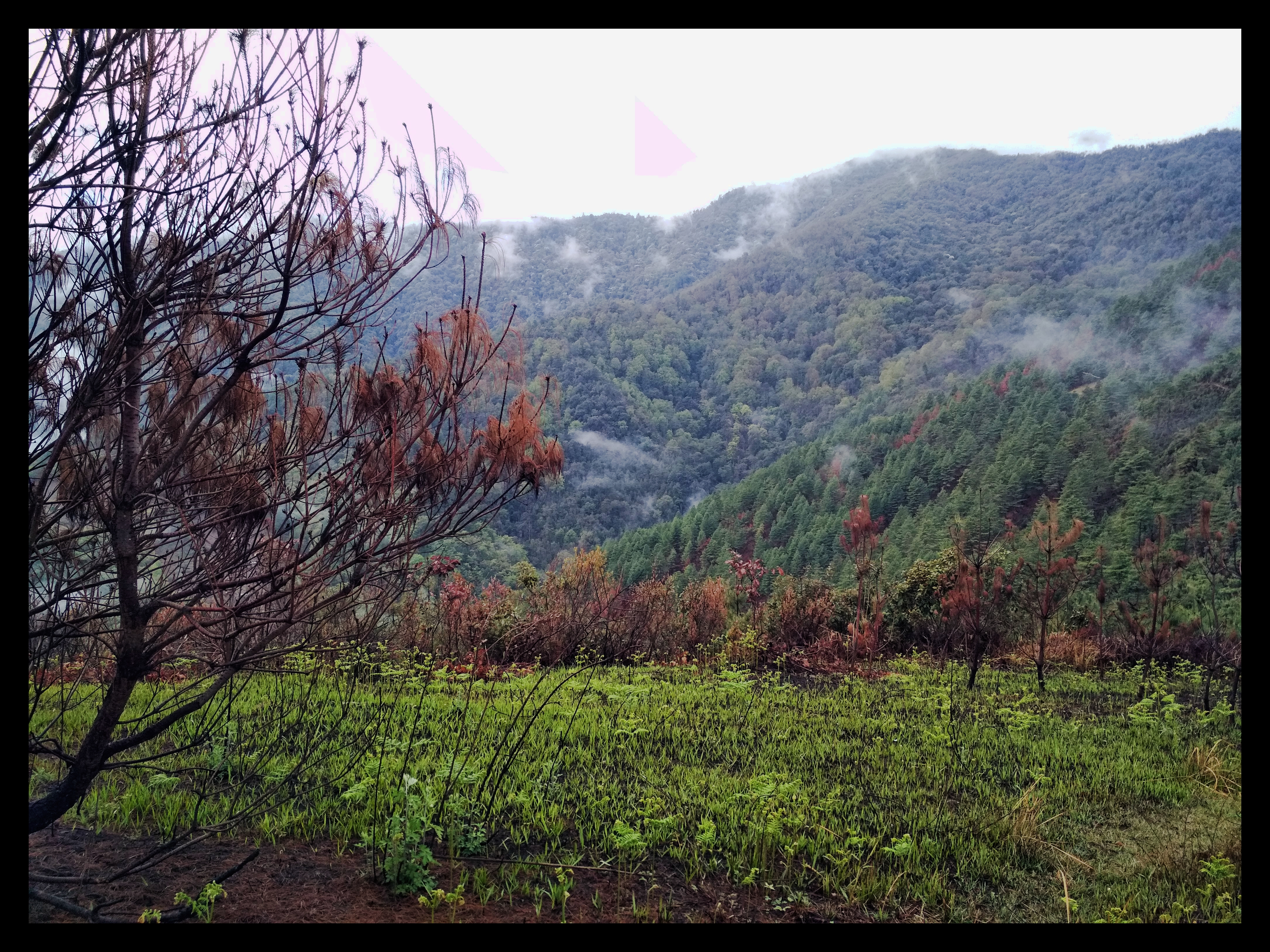
Dirang and NIMAS
We reached Dirang by around 05:30PM and by this time it starts getting dark in this part of our country. Dirang is a reasonably big town as compared to other towns in this hilly area. Most of the essentials items would be available on the main road.
Mountaineer tip….Buy all the daily essentials which either you have forgotten or about which you came to know during the journey from other mountaineers.
To reach NIMAS one has to cross the town and then take left. Look out for a small board on the left for directions. From here it is a 3 km climb where the institute is perched atop this town. Coming back from the institute to the town frequently is neither permitted nor easily possible on foot. It is allowed once (on before) before the team heads for New Milling town after a week’s training.
All documentation and issue of mountaineering gear is done on arrival. The list of items issued here is as follows:-
Sleeping Bag
Sleeping Bag liner
Sleeping Mat
Snow Boots
Snow Axe
Sling
Ascender (Jumar)
Descender
Carabiner
Rucksack (80/90 litres)
Tumbler
Tiffin Box and Spoon
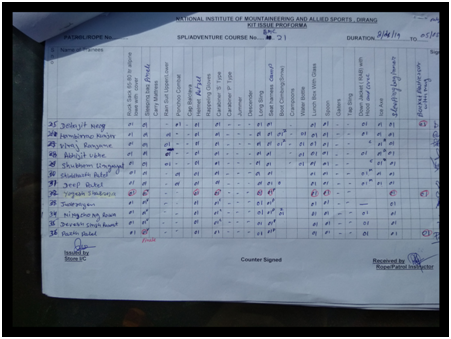
Some of the items which are required to be carried for the course would include:-
Trekking Shoes
Trekking Trousers
Full sleeve trek shirts
Sunscreen
Hat/ Cap
Torch
Woollen Socks and Sports socks
Toiletries and personal clothings
The stay is in 20 men tent which is comfortable.
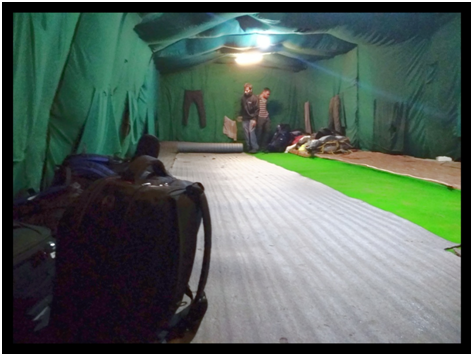
08 April 19- Course Commence
The day breaks early here and you realise that Arunachal is the land of rising sun in our country. After all the difficulty I faced in sleeping in a sleeping bag, I got up at 0430h and it was bright by 0445h.
Temple Parade. The first day starts with the temple parade. We were told that the fall in is at 0555 hrs and not even a second late would be allowed. Further to this, the instructor said , I don’t care if you come and stand here at 4′ O clock but when the clock strikes 0555h I must see you standing here. Speech of Army instructors here are good fun. Temple is just around a kilometer walk from the office. Artificial rock climbing walk is shown enroute to the temple. The wall is modern with rock as well as snow climbing faces. The instructors claims that with the wall height of 22 meters located at 6500 ft, it is the highest wall in Asia. Walk to temple is scenic and comfortable where the students sing bhajans and take blessings of goddess Durga.
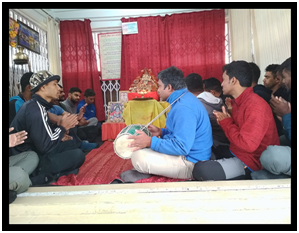
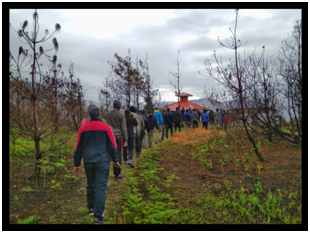
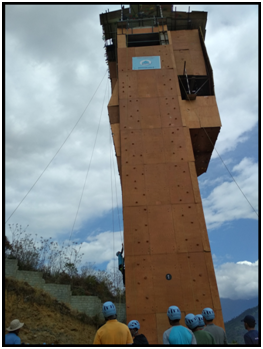
The first day also comprise Display of mountaineering equipment, rope work, medical and screening of movie ‘Vertical Limits’. NIMAS has state of art climbing equipment and most if it is sourced from European countries. Number of students were asked to repeat the medical next day due to high blood pressure, probably due to high altitude. Dinner is pretty early and students prepare to sleep by 8:30 pm.
09 April 19
The first trek of the course starts at 0530h down the hill towards town to Dirang monastery. Walk downhill on road was fun and we reached the monastery easily.
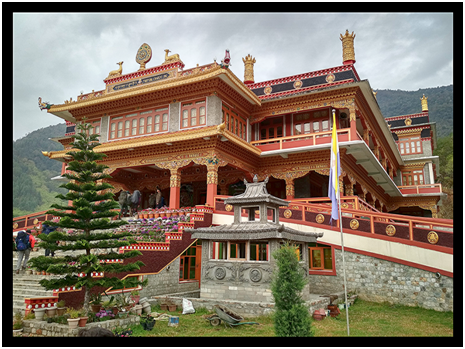
The return from monastery is tough as the instructors takes the team through the hill with very steep climb. The trek lasted for around 2h 30m. Remaining part of the day was utilised in lecture on rules and regulations by the Subedar Major, opening address by the officiating Director and for classroom instructions.
10 April 19
The third day is scheduled for the first trek to “Helmet top”. Helmet top is a nearby peak which NIMAS uses for developing endurance of their students. We started the trek with our 10 Kg bag packs at 0600h. Looking at the peak it seemed that this trek would be possible. However, after around 45 minutes it became very difficult. I continued to drag myself to reach to the top. The view from top was unexpected. On one side was the Dirang Valley with the river flowing through the city and towards north were the snow covered peaks of Arunachal.
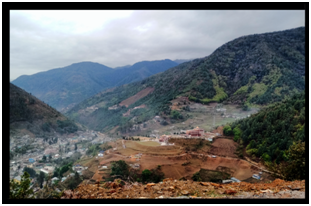
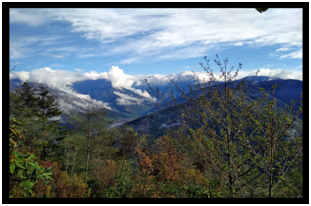
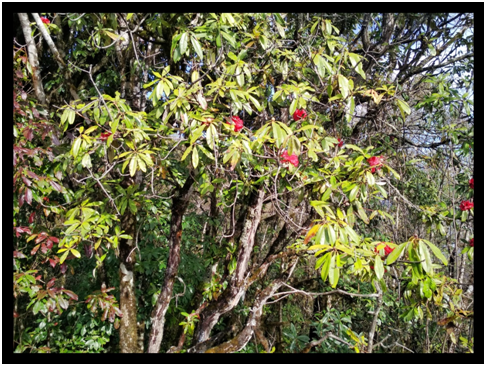
The treacherous trek keeps you mesmerized with the views and rhodendron trees (buranch in local language) with red flowers.
The remaining part of the fore noon session was for instructions on rock climbing at a nearby location. The class started with Bouldering : climbing over small rocks away from main rock face for training purpose. The basics, dos and don’ts were also covered.
Afternoon session was for teaching hazards in mountains and for tent pitching.
11 April 19
The day commenced with the trek towards the helmet top at 0600h. However this trek was not towards the peak of helmet top but around it through a treacherous and a lengthy route. We were back by 0845h. The medical lecture commenced soon after the breakfast. It was a series of lecture that lasted till 02: 30 PM. It included high altitude illnesses, cold injury, first aid and life support. The afternoon sessions were for ladder launching and lecture on Glacier. The course is jam packed and there is hardly any time for leisure reading.
Mountaineer tip : Don’t carry more than one book for leisure reading. I carried three.
12 April 19
All students were ready at 05:50 AM for the longest trek of first week. Orders were passed on the previous evening to have the back packs more than 12 kgs. The 16 km trek went through the Dirang Monastery, across the town, Jetsun village, kiwi gardens, back from the rear hill of NIMAS. Both, AMC and BMC courses followed the same trek. It is a very beautiful trek alongside Dirang river and then in the mountains.
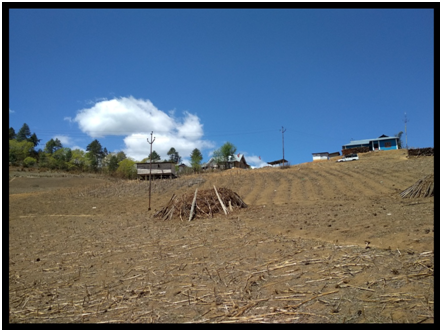
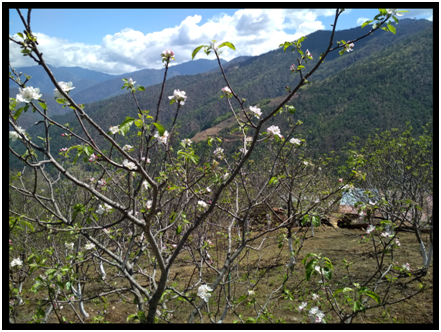
We had lunch under tree shades near apple gardens. The trek moved on from one mountain to another and every climb was exhausting. In the end we reached just short of the rear side of the institute. The life turned upside down when instead of going towards the institute we were again taken to the foothill of the institute. Instead of going towards the institute we were taken downhill away from the institute. This was tremendously demotivating. Thereafter, we were asked to climb the steep slope of the hill to the institute. The 3 km steep slope was more of a mental torture after 16 km trek with back packs. But as all good things at NIMAS ends this too ended with a hearty laugh on command of ‘Up’ by Havildar Parminder Kumar. The trek culminated at 3:20h and class on Avalanche commenced at 4:30 h.
13 April 19
After the endurance trek of yesterday this trek was smaller, for around two hours to a Gompa in a nearby village and back through a steep slope. The forenoon session was utilised for instructions on artificial wall climbing followed by endless drills of climbing the wall. I could reach the top during the first run but after that the arms were so fatigued that I couldn’t even cross the half mark.
Post lunch session was given as liberty to students for going to Dirang market and buy stuff for next day’s move to New Milling. The catch here is that the liberty was for three hours and no vehicle was provided. We were to go down the 3 km trek on foot. Naturally, I choose to relax in my tent and pack my bags for the movement.
14 April 19
Breakfast was provided at 05:00 h. The convoy departed at 0830h towards Jang which is around 100km from Dirang on the road to Tawang. Baisakhi military station falls on the way where one can grab some small eats. The route is through Senge , Baisakhi, Jaswantgarh, Sela and Jang. Jaswantgarh has a very interesting bravery tale. An army Jawan named Jaswant Singh got stranded at his post when his unit retreated due to onward march of Chinese troops in 1962. The Jawan had gone out to meet his girl friend Sela when the unit retreated. On return to the unit he found the posts deserted with all the arms ammunition there and enemy troops marching towards him. He fought valiantly manning all the posts sequentially and holding the enemy for 72 hours during which Sela her sister and their father assisted him. But finally they all succumed to enemy assault and Lance Naik Jaswant Singh was beheaded by the Chinese.
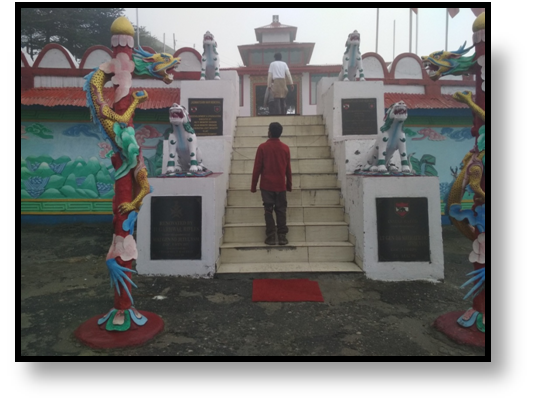
The convoy stopped at Jang from where the 17 km march towards New Melling started. It took us four hours of walk with back pack to reach this small hamlet of few houses and an inspection bunglow of PWD where we stayed. The aim for staying at New Melling is to acclimatize the students and to train them on rock climbing.
15-17 April 19
The back pack was reduced to 10 kgs and the trek to Hydel power station and back was for around 9 km. Remaining part of the day was for actual rock climbing on rock faces 1, 2 and 3. The routine here is quite smooth. Next day we got up by around 4 am. It has been raining incessantly since last evening but the rains stop just prior commencement of morning trek at 0550h.The trek takes the same route towards hydel station and then gains more height as compared to the previous day. This further increased on 17 April to gain height of around ten thousand feet. The main aim of stay is to acclimatise the students for next stop at Mago. Remaining part of the day was for rock climbing and instructions on how to make a Base for climbing and rappelling e.g. linear, triangle, rectangular, rock and tree bases. Class on survival was conducted on 17 April since it continued to rain.
It was as if rain gods have heard us, the training got suspended in the afternoon of 17 April. This gave all of us a lovely opportunity to talk to each other in small groups. The topics ranged from experiences of solo treks in ladakh to the monetary policy of RBI. One of the most rewarding experience of this course is to know so many aspiring mountaineers from such diverse backgrounds like railway loco pilot, author, travel blogger, farmer cum scientist, trek organisers etc. Their experiences were really very rich. Of course it is fun to not have training on a day and just talk.
Another interesting thing at New Melling is Aunty’s shop (the only shop) which not only provides minor grocery items but is a must visit for authentic Momos, masala maggi ( mixed with chilly chutney) and coffee.
18 April 19
The day was scheduled for trek to the highest trekable place in the area – Thingbu village. At a height of 10500 feet the village is at a distance of 22 km by ‘kachha’ road. However, the trek through mountains is much short. Although the steep climb is very difficult to negotiate. Arrival at the village on the sloppy heights of grasslands is mesmerizing with cattle grazing and snow covered peaks overlooking the Thingbu glacier at a distance. It took us four and a half hours to and fro.
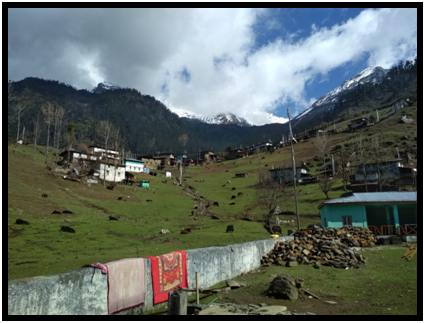
The latter part of the day was for rock climbing and class on map reading.The nights at New Melling were equally beautiful with full moon, dark clouds amidst mountains and river.
19 April 19
Today morning schedule was walk to hydel power station and back a total distance of 8 km (route for endurance run towards the end of the course) without ruck sack. This was followed by exam on rock climbing on rock faces 1 and 2. The afternoon was utilised in dipping in cold water of the nearby river Mago Cho since it has been some days we had taken a shower.
20 April 19
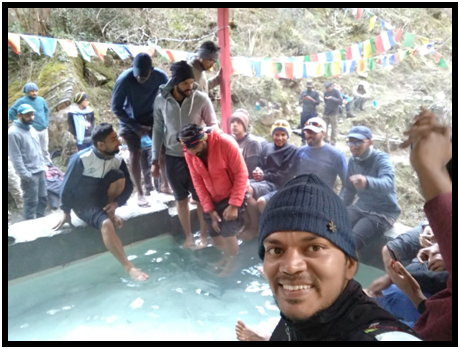
The morning trek was utilised to go to hot water spring, around 5 km from New Melling. The trail to the hot water spring is very scenic and is an ideal destination for family outing. Dipping legs in the hot water pond was very refreshing. Within ten minutes we could feel all the muscle fatigue melting away. Forenoon was utilised in exam on knots, hitches, rappelling and climbing base. Stomach rappelling and side rappelling were also taught.
21 April 19
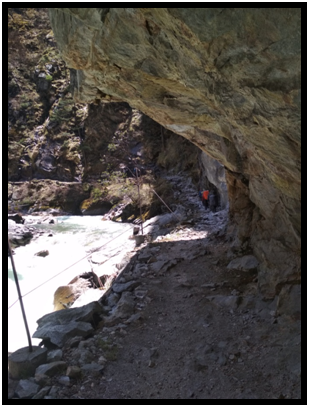
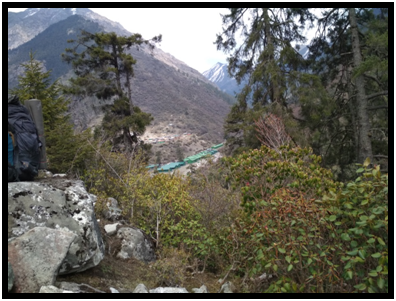
The most rigorous trek of the course is considered to be the trek from New Melling to Mago village, a distance of 24 km on a trail along river Mago Chu. The day commenced with trek with full ruck rack ( around 18 kg). The trek continuously goes upslope and down slope following the upward journey of the river. The trail is precarious being carved out by cutting rock on one side, the river on the other side can be seen in full flow. This is indeed the most difficult trek of the course because the slopes seem to be never ending and breathing becomes difficult as one gains height. Mago is at a height of 11500 feet as compared to 8500 feet of New Melling. We reached Mago at 2: 20 PM. Everyone was filled with joy at the first sight of Mago. The reward of the hard work was dipping in the hot water spring in which all the boys jumped leaving no space for even a single soul. The hot water removed all the muscle fatigue.
22 April 19
The stay at Mago is in a prefabricated dormitory of army. We have to put our sleeping mats and sleep on the floor in sleeping bags. Non availability of phone charging facility is a major consideration here. There is no power supply in the dorm.
Mountaineer tip :- It’s advisable to carry a power bank and conserve on battery power of your electronics.
Though power supply is available through a generator at Mago but you have to liaise with a staff member to charge your batteries.The second day at Mago was the morning trek to Chuna post – a forward post of Indian Army. The trek was along an under construction road from Mago to Tawang. We covered the distance of around 8 km in two hours. It was a spectacular view of the post in Chuna valley at below freezing temperature due to wind chill, height of 12900 feet and snow fall. The hospitality of the army unit was heart warmin. They arranged for hot soup, tea and loads of refreshments. The remaining part of the day was for issue of snow boots, ice axe and cramp-ons. The ITBP post at Mago allowed us to make phone calls since the cell phone connectivity was down from last two months at Mago.
23 April 19
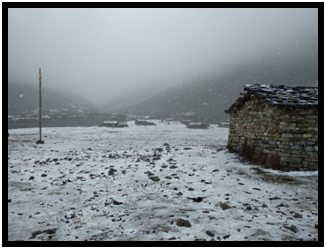
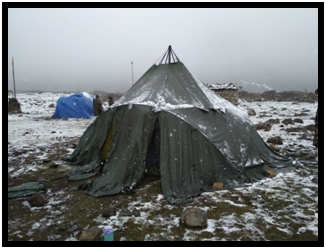
We set out for Jeethang in the morning which is the next base. A distance of around 12 km through the mountains and heavier back pack was very tiring. Jeethang is a hamlet of around 20 stone houses which have been build by people of Mago to support their cows and yaks in grasslands. The place was dry, just above the treeline, with only juniper shrubs and a river. However, within no time it started snowing and the whole landscape changed. We had to pitch up our tents while it was snowing. This was followed by survival drill wherein we left our tents and moved to mountains to make our own temporary shelter. Our group found a rock shelter and covered it with poncho. The next step was to light a fire and warm up our frozen limbs. After dinner we were allowed to return to our tents.
24 – 29 April
At this juncture I would cover the events together and not day wise in order to conserve battery power (I didn’t carry spare batteries).
The march to Meerathang Base Camp started after striking down the tents and clearing up the area. The distance of around 7 km was full of difficult slopes and river sides. The Base Camp have a breath taking view.
On 25 April we set foot for the first time towards the Glacier training area of Meerathang. A distance of around 4 km is very arduous due to steepest slopes of the course, snow and scree. It takes around 3 hours to cover the distance. A break in between this trek reveals a beautiful lake amidst mountains (Tarn in mountaineers parlance) named Rani Jheel.
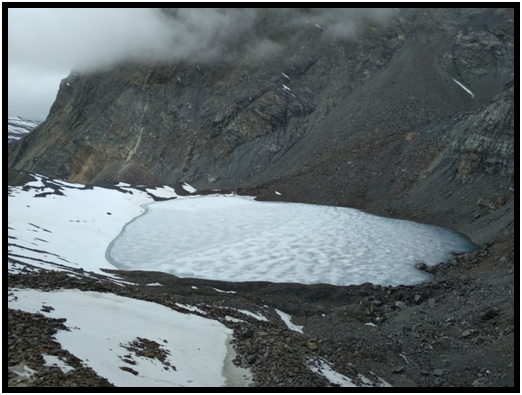
The journey ends at an unbelievable and spectacularly beautiful sight of the ice wall at Meerathang glacier.After worshipping ‘Barfani Baba’ at the ice wall with prasad of Halwa our training began for the ice craft. Drill for 10 point, 2 point, 3 point and four point climbs were taught on the first day. The ice craft training is for three days and the fourth day is for exam on ice craft. The nights at the base camp were also beautiful ( freezing also) with starlit and moon lit skies. Training on crevasse rescue is also given as part of glacier training. Out of five days stay at Meerathang Base Camp we were able to go to the glacier four times.
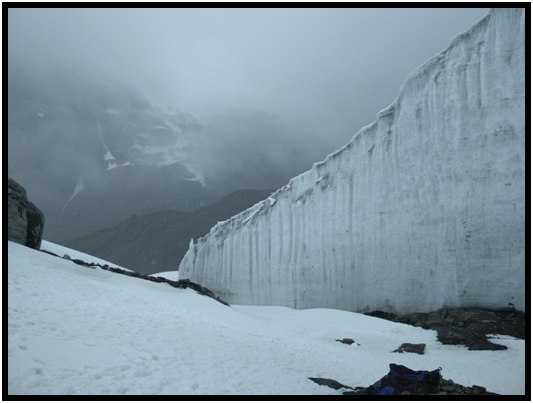
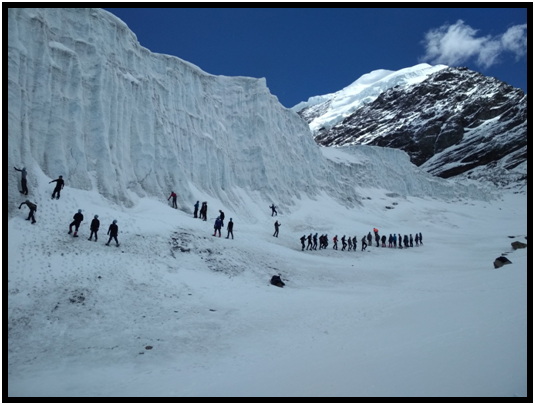
30 April 19
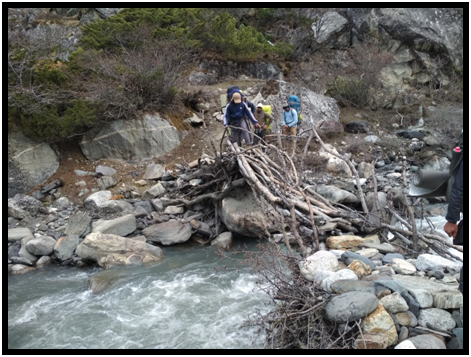
On culmination of glacier training we headed back to Mago. The distance of around 20 km is covered in one day. We started at seven in the morning and reached Mago at one in the afternoon. Tea break was at Jeethang. This time Jeethang presented a lush green grassland view as compared to snow covered land last time. The motivating factor for this long trek was the hot water spring at Mago into which we jumped as soon as we could. The evening was utilised for preparation of next days trek to New Melling.
01 May 19
It had rained all night at Mago and it was drizzling in the morning as well. We conmenced the trek at 06:30. Most of the trek was slippery but weather improved after few hours. This 24 km long trek, as discussed earlier, is by far the most challenging. We reached New Melling at 01:30h and all that we could yearn was rest.
02 May 19
This day was for the most awaited Endurance run of 8Km with 15 Kg back pack. The run commenced at 0600h from New Milling to Hydel power station and back. Students are required to complete the run in 56 minutes to score full 20 marks. Thereafter, 2 marks are deducted for every four minutes. After completion, it seems to be the most satisfying event. Each such event or exhausting trek always ends with a treat of ‘halwa’, lime juice and chai.
River Crossing. The forenoon session was for river crossing. A horizontal hauling line was rigged up across the river and students were required to cross it by keeping the body horizontal and pulling by hands. The important thing here is that the Instructors ensured that each student is dipped into the ice cold glacier water by pulling the hauling line up and down multiple times. More you resist, more number of times you are likely to be dipped. It was a great fun.
Mountaineer Tip: Don’t go for it in the beginning, exchange shoes with someone who was dipped in the water and keep your shoes dry for the last trek next day.
03 May 19
Bags were packed and we formed up well in time for the last trek of the course, from New Milling to Jang, a distance of around 15 Km. We started at 6 AM and reached Jang at around 12:30 PM. Though we were ecstatic that this is the last trek of the course and the hardships would come to an end, but the feelings were mixed. The difficult part of the trek was that there was only one break of about 10 minutes and the continuous march. The sight of the vehicles lined up was very comforting and the ruck sacks were immediately put in the loading vehicle and got rid of. As the vehicle gained more height to reach Sela pass (13,700 feet), we stopped at Jaswantgarh.
04 May 19
This was the last day of the course with written exam and returning of all the gear issued by the institute. The remaining part of the day was for bidding Good Byes to all the friends who supported each other in hardships and shared laughters.
The Basic Mountaineering Course is a must for a person who aims to spend some time in mountains, whether it be for treks or for expeditions. The course takes an individual to his/ her next level of fitness, loosing weight in 28 days is just one of the offshoot. As the instructors say at the institute ‘the day you leave NIMAS you would feel that your one leg is in air’.
Amit Sharma
9969401221
 mountain life
You have summoned a month long camp in just a couple of pages. Very well expressed.
LikeLiked by 1 person
Thank You for encouraging
LikeLike
I will be joining this course in April 2020, weather would remain almost same as yours course time. Just want to know NIMAS provides a list of things to carry. Can you provide some tips on this? Like what is essential and what is not at all needed. May be a naive question but I really want to carry just essential things.
Any other tips to ace the course?!
LikeLike
Hi Tejas. I had provided the list of items provided by NIMAS in the article. You are allowed to keep ur extra luggage at NIMAS before u start climbing further. So don’t worry much about extra luggage.
LikeLike
Hi! Superb Post. I am joining their BMC course in Aug 2020. I was wondering till which day we will get mobile connectivity?
LikeLike
Great. All the Best to you. Dirang has good mobile connectivity. After two weeks when u leave Dirang for further treks there won’t be any mobile connectivity, only pure bliss.
U can make calls from Mago through a CRPF facility.
LikeLike
Thank you for taking time to write this. I hope you do a lot of adventure like this and keep guiding us.
LikeLike